Further events in the Visualizing Camelot series;
Welcome to King Arthur Forever: The Matter of Britain Lives, a blog sponsored by The Alliance for the Promotion of Research on the Matter of Britain. Our mission, first laid out in 2000, is to embrace the full corpus of the Arthurian tradition and to promote study, discussion, and debate of representations of the legends in all their forms as produced from the Middle Ages through the contemporary moment (and beyond).
To me, methought, who waited with a crowd,
There came a bark that, blowing forward, bore
King Arthur, like a modern gentleman
Of stateliest port; and all the people cried,
"Arthur is come again: he cannot die."
"Morte d'Arthur" (1842)
Alfred, Lord Tennyson
There came a bark that, blowing forward, bore
King Arthur, like a modern gentleman
Of stateliest port; and all the people cried,
"Arthur is come again: he cannot die."
"Morte d'Arthur" (1842)
Alfred, Lord Tennyson
Friday, November 8, 2024
Thursday, September 19, 2024
Notice Visualizing Camelot Series Continues
My thanks to Barbara Lupack for sharing this:
VISUALIZING CAMELOT
An Exhibition from the Collection of Alan Lupack and Barbara Tepa Lupack
At the University of Rochester
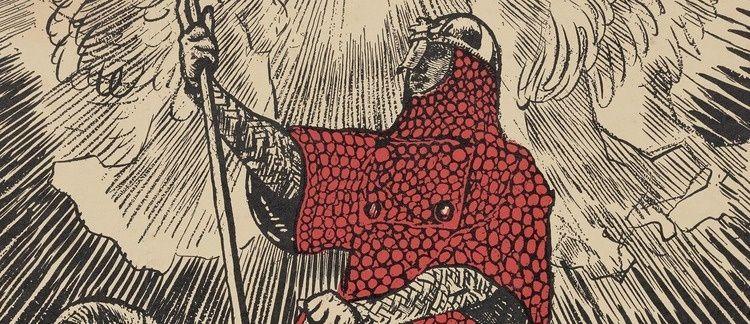
Visualizing Camelot, a library-wide exhibition that runs until early December, 2024, explores the diverse ways that the stories of King Arthur’s Camelot have been imagined, reimagined, and visualized—both in high culture (paintings, drawings, illustrated books) and in popular culture (film, toys, games, comic books, cartoons, dishware, product names, business logos, etc). More than 350 items, including numerous original works of art, are on display. The exhibition is free and open to all. There is also a digital version of the exhibition, which can be accessed at Welcome · Visualizing Camelot · RBSCP Exhibits (rochester.edu)
Among the fall events that will be held in conjunction with the exhibition is a series of lectures. On September 19, 2024, at 5:00 p.m., Dr. Dorsey Armstrong, professor at Purdue University and editor of the journal Arthuriana, will speak about “Questing after the Questing Beast: Representing the Beast Glatisant from the Middle Ages to the Modern Period.” Her presentation will be held on-site at the Robbins Library of Rush Rhees Library and will also be Zoomed (registration for the Zoom link: https://forms.gle/vGeGMsZTyVmwMkiUA). On October 24, 2024, internationally-acclaimed artist Anna-Marie Ferguson, illustrator of the Cassell edition of Malory’s Le Morte d’Arthur, will speak about “Illustrating the Arthurian Legends: A Conversation with Artist Anna-Marie Ferguson.” Held on-site at the Robbins Library of Rush Rhees Library, the presentation will also be Zoomed (registration for the Zoom link: https://forms.gle/7v33aDh3QXg4caYb9.)
The presentations are free and open to all. Please check back for other Visualizing Camelot fall events and activities. We hope that you will visit the exhibition and join us for some or all of the events!
September 19, 2024, 5:00 p.m. EST. Robbins Library.
“Questing after the Questing Beast: Representing the Beast Glatisant
from the Middle Ages to the Modern Period.”
Registration for Zoom link: https://forms.gle/vGeGMsZTyVmwMkiUA
Presented by Dr. Dorsey Armstrong, Professor at Purdue University
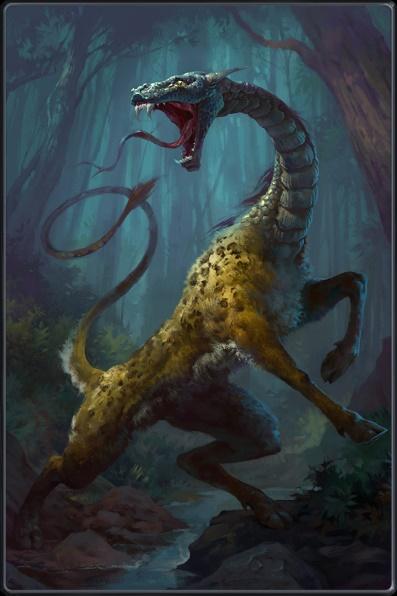
The Questing Beast (or the Beast Glatisant [Barking Beast])—a strange creature with the head and neck of a serpent, the body of a leopard, the haunches of a lion, and the feet of a hart—is the subject of quests by a number of Arthur’s knights, including King Pellinore, Sir Palamedes, and Sir Percival. Dr. Armstrong will explore the representations of the Questing Beast from the medieval to the modern.
Dr. Armstrong has written and lectured extensively on the Arthurian legends. Author of Gender and the Chivalric Community in Malory's Morte d'Arthur (2003) and a modern English translation of Malory's Morte Darthur (2009), she serves as Editor-in-Chief of Arthuriana and sits on the board of directors of TEAMS.
Dr. Armstrong’s presentation is the first of several fall events and lectures in conjunction with the Visualizing Camelot exhibition. Please check back for updates.
October 24, 2024, 5:00 p.m. EST. Robbins Library.
“Illustrating the Arthurian Legends:
A Conversation with Artist Anna-Marie Ferguson.”
Registration for Zoom link: https://forms.gle/7v33aDh3QXg4caYb9
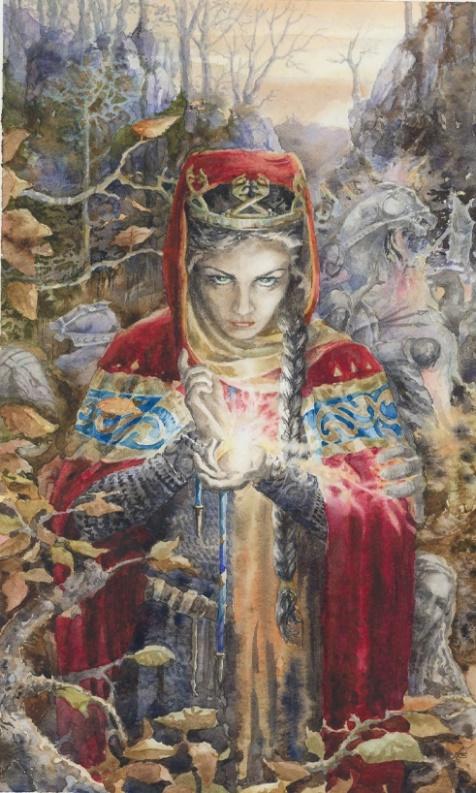
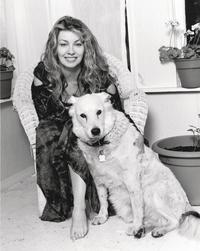
Internationally acclaimed author and Illustrator of Legend: the Arthurian Tarot and its accompanying book, A Keeper of Words, Anna-Marie Ferguson is also the illustrator of the 2010 Cassell edition of Malory’s Le Morte d’ Arthur. She holds the distinction of being the first woman artist ever to illustrate a complete Malory. Her interest in mythology and history is longstanding, and her art draws on the magic and legends of her birthplace in the historic New Forest of Southern England and the vast landscapes and natural beauty of Alberta, Canada, where she currently resides.
Please check back for updates on other fall events and lectures in conjunction with the Visualizing Camelot exhibition.
VISUALIZING CAMELOT
Upcoming Fall Exhibition Events and Programs
All presentations will be held on-site at the Robbins Library @ Rush Rhees Library
and will also be Zoomed. Please check back for updates. Hope you will join us!
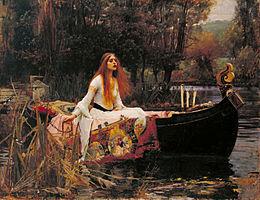
Dr. Margaret Sheble, ACLS “Leading Edge” Fellow,
will speak about representations of the Lady of Shalott.
When: November 15, 3 pm EST
Where: Robbins Library and Zoom
Registration for Zoom link: TBA
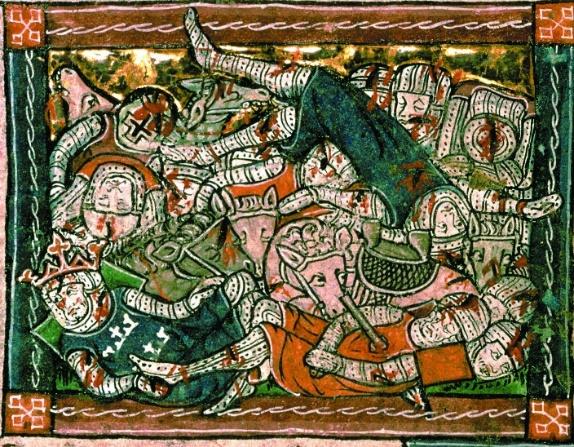
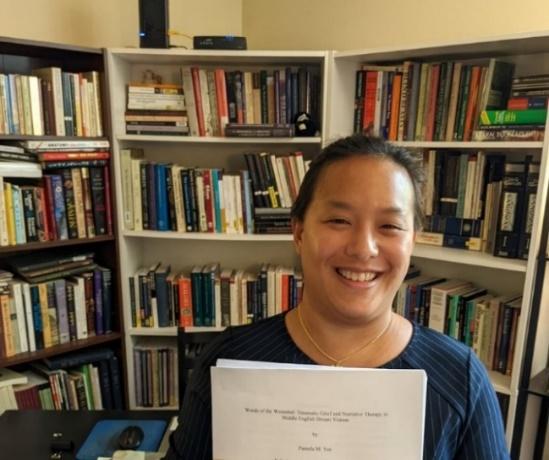
Dr. Pamela Yee, University of Rochester,
will speak about the Arthurian Legends and Vietnam
When: November 21, 5 pm EST
Where: Robbins Library and Zoom
Registration for Zoom link: TBA
Wednesday, September 4, 2024
CFP More than The Green Knight: Exploring the Ongoing Tradition of Adapting and Appropriating Sir Gawain and the Green Knight (hybrid) (9/15/2024; ICMS Kalamazoo 5/8-10/2025)
More than The Green Knight: Exploring the Ongoing Tradition of Adapting and Appropriating Sir Gawain and the Green Knight (hybrid)
Sponsored by Association for the Advancement of Scholarship and Teaching of the Medieval in Popular Culture; International Arthurian Society, North American Branch (IAS/NAB); International Pearl-Poet Society
Organized by Michael A. Torregrossa, Joseph M. Sullivan, and Amber Dunai
60th International Congress on Medieval Studies
Western Michigan University (Kalamazoo, Michigan)
Hybrid event: Thursday, 8 May, through Saturday, 10 May, 2025
Please Submit Proposals by 15 September 2024
Session Information
Released in 2021, David Lowery’s film The Green Knight thrust the medieval romance Sir Gawain and the Green Knight into the spotlight like never before and attracted the attention of viewers and critics across the globe. Scholars of medieval literature and film have also been inspired by the film’s release, and there is now a flourishing field of The Green Knight Studies as displayed in articles, books, conferences, essays, special issues, and themed sessions. However, all of this attention on Lowery’s work creates a limited understanding of the full post-medieval afterlife of Sir Gawain and the Green Knight.
We propose this session as a counter to the flurry of attention on Lowery’s work. The Green Knight is merely one example of a much wider array of adaptations of the story that began in the sixteenth century with The Greene Knight and continues to this day with comics, drama, fiction, film, games, illustration, music, opera, picture books, radio broadcasts, and television programming. Beyond these, aspects of Sir Gawain and the Green Knight have been appropriated by many creative artists and integrated into their own creations in various media. Collectively, these adaptations and appropriations make up a rich textual tradition for Sir Gawain and the Green Knight that now extends over five centuries and deserves more notice.
Our intent in this session is twofold:
- First, to uncover what we lose by focusing on Lowery’s film outside of the larger context of adaptation and appropriations of Sir Gawain and the Green Knight.
- Second, to highlight what can be added to the larger fields of Arthurian Studies and Pearl-Poet Studies by widening our view of Sir Gawain and the Green Knight to include further or other adaptations and appropriations of the text in our research and teaching.
Submissions should address at least one (if not both) of the following questions:
- What other adaptations and appropriations do we miss by focusing on Lowery’s film?
- What do we gain (for the disciple, our students, and/or ourselves) when we look beyond it?
Thank you for your interest in our session. Please address questions and/or concerns to the organizers at MedievalinPopularCulture@gmail.com.
Submissions will also be considered as part of an essay collection on the theme.
Submission Information
The process for proposing contributions to sessions of papers, roundtables and poster sessions for the International Congress on Medieval Studies uses an online submission system powered by Confex. Be advised that submissions cannot be accepted through email. Rather, access the direct link in Confex to our session at https://icms.confex.com/icms/2025/paper/papers/index.cgi?sessionid=6431. You can also view the full Call for Papers list at https://wmich.edu/medievalcongress/call.
Within Confex, proposals to sessions of papers, poster sessions and roundtables require the author's name, affiliation and contact information; an abstract (300 words) for consideration by session organizer(s); and a short description (50 words) that may be made public. Proposals to sessions of papers and poster sessions also require a title for the submission (contributions to roundtables are untitled).
Proposers of papers or contributions to roundtables for hybrid sessions should indicate in their abstracts whether they intend to present in person or virtually.
If you need help with your submissions, the Congress offers some resources at the Participating in the Congress page at https://wmich.edu/medievalcongress/participating-congress. Click to open the section labeled “Propose a Paper” and scroll down for the Quick Guide handouts.
Be advised of the following policies for participating in the Congress:
You are invited to propose one paper (as a sole author or as a co-author) for one session of papers. You may propose a paper for a sponsored or special session or for the general sessions, but not both. You may propose an unlimited number of contributions to roundtables and poster sessions, but you will not be scheduled to actively participate (as paper presenter, roundtable discussant, poster author, presider, respondent, workshop leader, demonstrator or performer) in more than three sessions.
Further details on the Congress’s Policies can be found at https://wmich.edu/medievalcongress/policies-guidelines.
A reminder: Presenters accepted to the Congress must register for the full event. The registration fee is the same for on-site and virtual participants. For planning, the cost for the previous year’s event is posted at the Congress’s Registration page at https://wmich.edu/medievalcongress/registration.
If necessary, the Medieval Institute and Richard Rawlinson Center at Western Michigan University offer limited funding to presenters. These include both subsidized registration grants and travel awards. Please see the Awards page at the Congress site for details at https://wmich.edu/medievalcongress/awards.
Thursday, April 18, 2024
CFP Tradition and Innovation in Sir Gawain and the Green Knight Conference (4/20/2024; Nancy, France/hybrid 11/21-22/2024)
CFP: Tradition and Innovation in Sir Gawain and the Green Knight
Source: https://medievalisms.org/cfp-tradition-and-innovation-in-sir-gawain-and-the-green-knight/
We are pleased to announce a call for papers for an upcoming conference on “Tradition and Innovation in Sir Gawain and the Green Knight,” to be held in Nancy (France) on 21-22 November 2024. This conference will be held in hybrid mode.
Conference Theme: Sir Gawain and the Green Knight has captivated readers for centuries with its complex narrative, moral dilemmas, and poetic excellence. The conference seeks to explore the dynamic interplay between tradition and innovation within the text, examining how the poem, but also the works derived from it and the scholarship devoted to it, draw upon established traditions while introducing novel elements.
The first axis of our inquiry focuses on the poem itself. While it is steeped in the traditions of Arthurian romance and Middle English poetry, Sir Gawain and the Green Knight departs from them and frustrates expectations in significant ways, both in terms of its content and its form. This exploration aims to shed light on the creative ways in which Sir Gawain and the Green Knight navigates established literary norms, both adhering to tradition and introducing innovative elements within its narrative structure and thematic content.
The second axis of our inquiry focuses on the many works inspired by Sir Gawain and the Green Knight. This includes rewritings, translations, and visual interpretations that grapple with the tension between fidelity to the original and the impulse to reimagine the narrative within contemporary contexts. From modern language adaptations to artistic representations, we seek to understand how the poem’s essence endures through the transformative lens of subsequent generations.
We invite proposals for individual papers (20 minutes). Please submit abstracts (250-300 words) along with a brief bio to Colette.Stevanovitch@univ-lorraine.fr by 20 April. Include your name, institutional affiliation, contact information, and any audiovisual requirements.