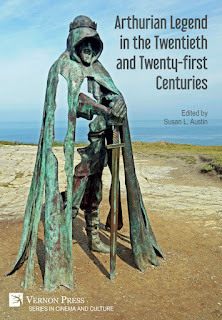
Arthurian Legend in the Twentieth and Twenty-first Centuries
Full details: https://vernonpress.com/book/1011 (plus intro and index)
Susan L. Austin (Ed.)
With contributions by Sarah Gordon (Utah State University), Carl Sell (Lock Haven University of Pennsylvania), Tracey Thomas (York University), Susan L. Austin (Landmark College), Zainah Usman (Tarrant Country College Northwest), Adrienne Major (Landmark College), Erin Mullally (Le Moyne College), Leah Hamilton (Xavier University)
Hardback $61
Hardback $61
Availability: In stock
also in E-book $ 75 , Paperback $ 48
SUMMARY
The King Arthur we imagine did not exist in history. He is the result of stories told and retold, changed and added to by storytellers for centuries, each making the story reflect the storyteller’s time and values.
The chapters in this book look at movies, manga, comic books, a television show, and traditional books released since 1960 to explore some of the ways King Arthur has been reimagined in the past 60 years. Interpreting Avalon High and The Kid Who Would Be King, Camelot 3000 and King Arthur vs. Dracula, Fate/Zero, John Steinbeck’s The Acts of King Arthur and His Noble Knights, the influence of Arthurian legend on Harry Potter, Terry Gilliam’s The Fisher King, John Boorman’s Excalibur, Jerry Zucker’s First Knight, Antoine Fuqua’s King Arthur, Guy Ritchie’s King Arthur: The Legend of the Sword, Matthew Vaughn’s Kingsman: The Secret Service, Iris Murdoch’s The Time of the Angels, and the BBC series Merlin, the authors find that while we are still interested in the idea of King Arthur, we may also want his story to be more racially and gender inclusive, less elitist, and in some cases, more secular.
TABLE OF CONTENTS
Introduction
Chapter 1
Kids and kings: postmodern nostalgia and youthful Arthurian cinematic retellings
Sarah Gordon
Utah State University
Chapter 2
Camelot 3000 and Dracula vs. King Arthur: The uses of limited-run comics as updates of the Arthurian legend for contemporary readers
Carl Sell
Lock Haven University of Pennsylvania
Chapter 3
The fate of Artoria: contextually exploring gender, character, and conflict in Fate/Zero
Tracey Thomas
York University
Chapter 4
Gender and class in John Steinbeck’s The Acts of King Arthur and His Noble Knights
Susan L. Austin
Landmark College
Chapter 5
A kid wizard in King Arthur’s court
Zainah Usman
Tarrant County College Northwest
Chapter 6
Chivalry and ambition in Terry Gilliam’s The Fisher King
Susan L. Austin
Landmark College
Chapter 7
Democratic dreams and the death of Arthur, king
Adrienne Major
Landmark College
Chapter 8
Killing Arthur: revising the Perceval myth in “Kingsman: The Secret Service”
Erin Mullally
Le Moyne College
Chapter 9
The death of the Fisher King in Iris Murdoch’s The Time of the Angels
Susan L. Austin
Landmark College
Chapter 10
When Arthurian heroes fall: adapting moral failure and Christian redemption in the BBC’s Merlin
Leah Hamilton
Xavier University
Index
EDITOR BIOGRAPHY
Susan Austin has worked at Landmark College, Vermont, for over a decade. There, she pursues her research interests, which include film adaptations of literature and modern and contemporary fiction. She teaches a course that uses Arthurian and related materials as sources for analysis and synthesis essays, and then sends students off to research and write about related topics in literature, history, archaeology, science, and popular culture. She holds an MA in English Literature from the University of Massachusetts at Amherst. Associate Professor Austin has presented several papers at the Northeastern Modern Language Association Conference in the last decade and she has chaired five sessions, one of which is the basis for this volume.
also in E-book $ 75 , Paperback $ 48
SUMMARY
The King Arthur we imagine did not exist in history. He is the result of stories told and retold, changed and added to by storytellers for centuries, each making the story reflect the storyteller’s time and values.
The chapters in this book look at movies, manga, comic books, a television show, and traditional books released since 1960 to explore some of the ways King Arthur has been reimagined in the past 60 years. Interpreting Avalon High and The Kid Who Would Be King, Camelot 3000 and King Arthur vs. Dracula, Fate/Zero, John Steinbeck’s The Acts of King Arthur and His Noble Knights, the influence of Arthurian legend on Harry Potter, Terry Gilliam’s The Fisher King, John Boorman’s Excalibur, Jerry Zucker’s First Knight, Antoine Fuqua’s King Arthur, Guy Ritchie’s King Arthur: The Legend of the Sword, Matthew Vaughn’s Kingsman: The Secret Service, Iris Murdoch’s The Time of the Angels, and the BBC series Merlin, the authors find that while we are still interested in the idea of King Arthur, we may also want his story to be more racially and gender inclusive, less elitist, and in some cases, more secular.
TABLE OF CONTENTS
Introduction
Chapter 1
Kids and kings: postmodern nostalgia and youthful Arthurian cinematic retellings
Sarah Gordon
Utah State University
Chapter 2
Camelot 3000 and Dracula vs. King Arthur: The uses of limited-run comics as updates of the Arthurian legend for contemporary readers
Carl Sell
Lock Haven University of Pennsylvania
Chapter 3
The fate of Artoria: contextually exploring gender, character, and conflict in Fate/Zero
Tracey Thomas
York University
Chapter 4
Gender and class in John Steinbeck’s The Acts of King Arthur and His Noble Knights
Susan L. Austin
Landmark College
Chapter 5
A kid wizard in King Arthur’s court
Zainah Usman
Tarrant County College Northwest
Chapter 6
Chivalry and ambition in Terry Gilliam’s The Fisher King
Susan L. Austin
Landmark College
Chapter 7
Democratic dreams and the death of Arthur, king
Adrienne Major
Landmark College
Chapter 8
Killing Arthur: revising the Perceval myth in “Kingsman: The Secret Service”
Erin Mullally
Le Moyne College
Chapter 9
The death of the Fisher King in Iris Murdoch’s The Time of the Angels
Susan L. Austin
Landmark College
Chapter 10
When Arthurian heroes fall: adapting moral failure and Christian redemption in the BBC’s Merlin
Leah Hamilton
Xavier University
Index
EDITOR BIOGRAPHY
Susan Austin has worked at Landmark College, Vermont, for over a decade. There, she pursues her research interests, which include film adaptations of literature and modern and contemporary fiction. She teaches a course that uses Arthurian and related materials as sources for analysis and synthesis essays, and then sends students off to research and write about related topics in literature, history, archaeology, science, and popular culture. She holds an MA in English Literature from the University of Massachusetts at Amherst. Associate Professor Austin has presented several papers at the Northeastern Modern Language Association Conference in the last decade and she has chaired five sessions, one of which is the basis for this volume.
