To me, methought, who waited with a crowd,
There came a bark that, blowing forward, bore
King Arthur, like a modern gentleman
Of stateliest port; and all the people cried,
"Arthur is come again: he cannot die."

"Morte d'Arthur" (1842)
Alfred, Lord Tennyson

Showing posts with label Comics. Show all posts

Wednesday, August 27, 2025

Arthuriana Spring 2025 Now Available and Open Access

The previous number of Arthuriana, volume 35, number 1, for Spring 2025, is now available and can be read for free as open-access content from Project MUSE at https://muse.jhu.edu/issue/54796. 

This is a special "crossover" issue with the journal's Public Humanities Project, The So What, and guest edited by Jonathan F. Correa Reyes. 

Subscriptions are also available at https://www.arthuriana.com/subscribe.  


Table of Contents 

(35.1)

Medieval Studies as a Public Good

Jonathan F. Correa Reyes                                                                                                                               


Couverture: Transing the Medieval Manuscript

Christopher T. Richards


Love and Tales: A Bridge Between the Heart and Culture

Mario Martín Páez


De Amore, Game of Thrones, and Imagining Violence in the Twelfth and Twenty-First Centuries

Elizabeth Liendo


Concocting a Seat at the Roundtable: Arthurian Legend, Historical Genealogy, and the Making of Empire in Tudor and Stuart England

Alexander Lowe Mcadams


From Chile to Camelot: Reception of the Arthurian Arc of Mampato and Ogú

Jonathan F. Correa Reyes and Camila Gutiérrez


Medievalism and (White) Nationalism: From Ossian to Today

Vanessa K. Iacocca 


Unexpected Swords in the Stone

Brenna Duperron


Winner of the 2024 ‘Fair Unknown’ Award

Worshyp and Noyse: Emotional Communities and Chivalric Identity in Malory’s Morte Darthur

Victoria E. Dikeman


The Round Table: News from the North American Branch


REVIEWS

Mary Bateman, Local Place and the Arthurian Tradition in England and Wales 1400–1700

Dwayne C. Coleman  


Eleanor Johnson, Waste and the Wasters: Poetry and Ecosystemic Thought in Medieval England

Andrew M. Richmond


Michel Pastoureau, Dernière visite chez le Roi Arthur. Histoire d’un premier livre

Richard Utz


Tison Pugh, Bad Chaucer: The Great Poet’s Greatest Mistakes in the Canterbury Tales

Alex Mueller  


Usha Vishnuvajjala, Feminist Medievalism: Embodiment and Vulnerability in Literature and Film

Virginia Blanton  


John Withrington, ed., The Arthurian Texts of the Percy Folio

Theresa M. Kenney


Friday, June 14, 2024

Catching Up - Arthurian Literature 35 for 2020

Arthurian Literature XXXV

Edited by Elizabeth Archibald and David F. Johnson


Full details, previews, and ordering information at https://boydellandbrewer.com/9781843845454/arthurian-literature-xxxv/. 


TITLE DETAILS

227 Pages

23.4 x 15.6 cm

5 b/w illus.

Series: Arthurian Literature

Series Vol. Number: 35

Imprint: D.S.Brewer

Hardcover


9781843845454

June 2020

$115.00 / £75.00 (also available as an ebook)


DESCRIPTION

The continued influence and significance of the legend of Arthur are demonstrated by the articles collected in this volume.


The rich vitality of both the Arthurian material itself and the scholarship devoted to it is manifested in this volume. It begins with an interdisciplinary study of swords belonging to Arthurian and other heroes and of the smiths who made them, assessed both in their literary contexts and in "historical" references to their existence as heroic relics. Two essays then consider the use of Arthurian material for political purposes: a discussion of Caradog's Vita Gildae throws light on the complex attitudes to Arthur of contemporaries of Geoffrey of Monmouth in a time of political turmoil in England, and an investigation into borrowings from Geoffrey's Historia in a chronicle of Anglo-Scottish relations in the time of Edward I, a well-known admirer of the Arthurian legend, argues that they would have appealed to the clerical élite. Romance motifs link the subsequent pieces: women and their friendships in Ywain and Gawain, the only known close English adaptation of a romance by Chrétien, and the mixture of sacred and secular in The Turke and Gawain, with fascinating alchemical parallels for a puzzling beheading episode. This is followed by a discussion of the views on native and foreign sources of three sixteenth-century defenders of Arthur, John Leland, John Prise and Humphrey Llwyd, and their responses to the criticisms of Polydore Vergil. In twentieth-century reception history, John Steinbeck was an ardent Arthurian enthusiast: an essay looks at the significance of his annotations to his copy of Malory as he worked on his adaptation, The Acts of King Arthur and his Noble Knights. The volume moves to even more recent territory with an exploration of the adaptations of Malory and other Arthurian writers that occur in the comic books by Geoff Johns about Arthur Curry, aka Aquaman, King of Atlantis. The book is completed by a reprint of a classic essay by Norris Lacy on the absence and presence of the Grail in Arthurian texts from the twelfth century on.


CONTENTS

Arthurian Swords I: Gawain's Sword and the Legend of Weland the Smith - Richard Barber

Rex rebellis et vir pacificus: Civil War and Ecclesiastical Peacekeeping in the Vita Gildae of Caradog of Llancarfan - Andrew Rabin

Once and Future History: Textual Borrowing in an Account of the First War of Scottish Independence - Christopher Michael Berard

'Me rewes sore': Women's Friendship, Affect and Loyalty in Ywain and Gawain - Usha Vishnuvajjala

The Sacred and the Secular: Alchemical Transformation in The Turke and Sir Gawain - Natalie Goodison

'The native place of that great Arthur': Foreignness and Nativity in Sixteenth-Century Defences of Arthur - Mary Bateman

John Steinbeck's 'Wonder-Words' - Elaine Treharne and William J. Fowler

The Once and Future King of Atlantis: The Arthurian Figure in Geoff Johns's Aquaman: Death of a King - Carl B. Sell

Arthur and/or the Grail - Norris J. Lacy


Saturday, February 17, 2024

Arthuriana Fall 2023

Recently released. Subscribe at the Arthuriana website, or (if you're lucky to have access) read this issue at Project MUSE. 


Arthuriana 33.3 (Fall 2023)

Table of Contents 


Special Issue: Who Gets to Be Legendary? 

Guest edited by Margaret Sheble


Introduction: Why Can’t Mermaids Be Ethnically Diverse? Legends and Legend-Making in Arthurian Studies 

Richard Sévère 


White Merlin: A Modern Misconception about the Legendary Merlin

Tzu-Yu Liu 

Abstract:

Different from the predominantly white Merlins on both big and small screens today, Merlins in medieval legends are never described as having white skin. In fact, in various texts Merlin is specifically depicted as a dark-skinned character capable of making legendary accomplishments. The few Merlins of color onscreen have informed our understanding of Merlin as a legendary character in various ways, and more diverse representations of Merlin onscreen could help to dispel the misconception that the legendary Merlin is by default white. (TL)


‘Why is he Indian?’: Missed Opportunities for Discussing Race in David Lowery’s The Green Knight (2021)

Tirumular (Drew) Narayanan 

Abstract:

This article explores the depiction of Gawain in The Green Knight (2021). Despite having cast Dev Patel in the starring role, the film avoids any substantive discussion of race in Camelot. By trading in optical diversity alone, it deploys BIPOC bodies without ever telling their stories. (TDN)


Towards Narrative Plenitude: Asian Representation in Young Adult Arthurian Fantasy 

Pamela M. Yee 

Abstract:

This article examines how two authors of Asian descent tackle the problem of 'narrative scarcity' for marginalized writers in their Young Adult Arthurian texts: Williams' 'The Quay Stone' posits the relationship between colonizer/colonized as akin to domestic abuse, while Chupeco's A Hundred Names for Magic series integrates Eastern and Western myths. (PY)


Who is Asking?: Afro-Arthurian Legend-Making in N.K. Jemisin’s Far Sector 

D’Arcee Charington Neal 

Abstract:

Whether an Arthurian knight, a Green Lantern, or a Legendborn, one cannot have a legacy without first becoming a legend. In N.K. Jemisin's graphic novel Far Sector (2020) Sojourner 'Jo' Muellein's story as both community activist and guardian echoes, reinvents, and reimagines Arthurian romances through the lens of Afrofuturism; further, this fantastical remix challenges white supremacist modes of oppressive comic tradition by foregrounding racial and gendered identities. Making a legend is not about whom society has agreed to be the answer. Instead, such ideals lie with whoever asks the question. (DCN)


REVIEWS 


Victoria Coldham-Fussell, Miriam Edlich-Muth, and Renée Ward, eds., The Arthurian World

Dan Nastali 


Louise D’Arcens and Andrew Lynch, eds., International Medievalism and Popular Culture 

Kevin J. Harty 


Patrick Del Luca, Chevalerie et royauté dans le roman d’Erec de Hartmann van Aue 

Ann Mccullough 


Megan Moore, The Erotics of Grief: Emotions and the Construction of Privilege in the Medieval Mediterranean 

Charles-Louis Morand-Métiver 


Saturday, February 18, 2023

JIAS 2022

Apologies for having missed posting this sooner.


The latest issue of the Journal of the International Arthurian Society was released in the fall of 2022 as a special issue on Arthurian Medievalism. It includes studies on comics, fiction, and film. Copies of the journal are sent to members of the society, and access to individual articles is possible through the publisher De Gruyter through the links below. 


Volume 10 Issue 1

Issue of Journal of the International Arthurian Society

CONTENTS
JOURNAL OVERVIEW

Contents

Publicly Available September 8, 2022

Titelseiten

Page range: i-iv
Cite thisDownload PDF

Requires Authentication September 8, 2022

Editorial

Leah Tether, Samantha J. Rayner
Page range: 1-2
Cite this

Requires Authentication September 8, 2022

Guest Editors’ Foreword: Arthurian Medievalism

Andrew B. R. Elliott, Renée Ward
Page range: 3-4
Cite this

Requires Authentication September 8, 2022

Desire, Consent and Misogyny in Post-medieval Adaptations of the Pelleas and Ettarde Story

Hannah Piercy
Page range: 5-28
More Cite this

Requires Authentication September 8, 2022

Notes Towards a Close Reading of David Lowery’s 2021 Film The Green Knight

Kevin J. Harty
Page range: 29-51
More Cite this

Requires Authentication September 8, 2022

‘An Ancient Procession’: Memory, Myth and Movement in Kazuo Ishiguro’s The Buried Giant

Alexie Labrom
Page range: 52-72
More Cite this

Requires Authentication September 8, 2022

Restorying Arthurian Legend: Space, Place and Time in Once & Future and Legendborn

Elizabeth Elliott
Page range: 73-93
More Cite this

Requires Authentication September 8, 2022

Deviant Characters and the Limits of Inventio in ‘Le Chevalier et la Charrette’

Karen Casebier
Page range: 94-113
More Cite this

Obituary
Requires Authentication September 8, 2022

Geoffrey Ashe (1923–2022)

Scott Lloyd
Page range: 114-115
Cite this

Requires Authentication September 8, 2022

Simon Gaunt (1959–2021)

Thomas Hinton
Page range: 116-121
Cite this

Requires Authentication September 8, 2022

Willem Pieter Gerritsen (1935–2019)

Bart Besamusca
Page range: 122-125
Cite this

Requires Authentication September 8, 2022

Douglas Kelly (1934–2022)

Keith Busby
Page range: 126-128
Cite this

Requires Authentication September 8, 2022

Angus Johnston Kennedy (1940–2021)

Nadia Margolis
Page range: 129-133
Cite this

Requires Authentication September 8, 2022

Nigel F. Palmer (1946–2022)

Almut Suerbaum
Page range: 134-137
Cite this

Open Access September 8, 2022

Ursula Schulze (1936–2020)

Ricarda Bauschke-Hartung
Page range: 138-139
Cite thisDownload PDF

Requires Authentication September 8, 2022

Fiona Tolhurst (1968–2021)

K. S. Whetter
Page range: 140-142
Cite this


Notices
Requires Authentication September 8, 2022

Biennial JIAS Essay Prize Competition 2023

Page range: 143-143
Cite this

Requires Authentication September 8, 2022

XXVIIth International Arthurian Congress, Aix-en-Provence, France, 11–18 July 2024

Page range: 144-145
Cite this

Tuesday, March 15, 2022

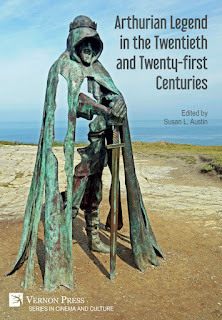
New Book: Arthurian Legend in the Twentieth and Twenty-first Centuries

New collection out now:

Arthurian Legend in the Twentieth and Twenty-first Centuries

Full details: https://vernonpress.com/book/1011 (plus intro and index)

Susan L. Austin (Ed.)

With contributions by Sarah Gordon (Utah State University), Carl Sell (Lock Haven University of Pennsylvania), Tracey Thomas (York University), Susan L. Austin (Landmark College), Zainah Usman (Tarrant Country College Northwest), Adrienne Major (Landmark College), Erin Mullally (Le Moyne College), Leah Hamilton (Xavier University)

Hardback $61 
Availability: In stock

also in E-book $ 75 , Paperback $ 48


SUMMARY

The King Arthur we imagine did not exist in history. He is the result of stories told and retold, changed and added to by storytellers for centuries, each making the story reflect the storyteller’s time and values.

The chapters in this book look at movies, manga, comic books, a television show, and traditional books released since 1960 to explore some of the ways King Arthur has been reimagined in the past 60 years. Interpreting Avalon High and The Kid Who Would Be King, Camelot 3000 and King Arthur vs. Dracula, Fate/Zero, John Steinbeck’s The Acts of King Arthur and His Noble Knights, the influence of Arthurian legend on Harry Potter, Terry Gilliam’s The Fisher King, John Boorman’s Excalibur, Jerry Zucker’s First Knight, Antoine Fuqua’s King Arthur, Guy Ritchie’s King Arthur: The Legend of the Sword, Matthew Vaughn’s Kingsman: The Secret Service, Iris Murdoch’s The Time of the Angels, and the BBC series Merlin, the authors find that while we are still interested in the idea of King Arthur, we may also want his story to be more racially and gender inclusive, less elitist, and in some cases, more secular.


TABLE OF CONTENTS

Introduction

Chapter 1
Kids and kings: postmodern nostalgia and youthful Arthurian cinematic retellings
Sarah Gordon
Utah State University

Chapter 2
Camelot 3000 and Dracula vs. King Arthur: The uses of limited-run comics as updates of the Arthurian legend for contemporary readers
Carl Sell
Lock Haven University of Pennsylvania

Chapter 3
The fate of Artoria: contextually exploring gender, character, and conflict in Fate/Zero
Tracey Thomas
York University

Chapter 4
Gender and class in John Steinbeck’s The Acts of King Arthur and His Noble Knights
Susan L. Austin
Landmark College

Chapter 5
A kid wizard in King Arthur’s court
Zainah Usman
Tarrant County College Northwest

Chapter 6
Chivalry and ambition in Terry Gilliam’s The Fisher King
Susan L. Austin
Landmark College

Chapter 7
Democratic dreams and the death of Arthur, king
Adrienne Major
Landmark College

Chapter 8
Killing Arthur: revising the Perceval myth in “Kingsman: The Secret Service”
Erin Mullally
Le Moyne College

Chapter 9
The death of the Fisher King in Iris Murdoch’s The Time of the Angels
Susan L. Austin
Landmark College

Chapter 10
When Arthurian heroes fall: adapting moral failure and Christian redemption in the BBC’s Merlin
Leah Hamilton
Xavier University

Index


EDITOR BIOGRAPHY


Susan Austin has worked at Landmark College, Vermont, for over a decade. There, she pursues her research interests, which include film adaptations of literature and modern and contemporary fiction. She teaches a course that uses Arthurian and related materials as sources for analysis and synthesis essays, and then sends students off to research and write about related topics in literature, history, archaeology, science, and popular culture. She holds an MA in English Literature from the University of Massachusetts at Amherst. Associate Professor Austin has presented several papers at the Northeastern Modern Language Association Conference in the last decade and she has chaired five sessions, one of which is the basis for this volume.

Wednesday, March 9, 2022

Sponsored Session - NeMLA Fair Unknowns


The 53rd Annual Convention of the Northeast Modern Language Association

Saturday, 12 March 2022 -- Track 17 (01:30-03:00 PM EST)

17.5 Fair Unknowns: Extending the Corpus of Arthurian Texts (Roundtable)


Sponsored by The Alliance for the Promotion of Research on the Matter of Britain (https://kingarthurforever.blogspot.com/)

Chairs: Carl Sell, Lock Haven University; Michael Torregrossa, Independent Scholar

Location: Dover A (Media Equipped)


Paper 1

"Gonzalo Torrente-Ballester's La saga/fuga de J. B. (1972): A Unique Arthurian Novel"

Juan Miguel Zarandona, University of Valladolid, Spain

In 1972, the Spanish writer Gonzalo Torrente Ballester (1910-1999) published a novel that surprised Spanish-language readers and that has been regarded as one of the ten best Spanish novels of the 20th century: La saga/fuga de J. B. Full of fantasy and provided with an acid sense of humour, it satirizes the long tradition of nationalist Galician writers whose texts that have been struggling to turn his home region, Galicia, into a full Celtic nation from the 19th century onwards in clear contrast with the rest of Spain. In other words, the matter of Britain or Arthurian legends had been made to take root in Galicia before, but never had such an ironic text as La saga/fuga de J. B. been published. Torrente Ballester was granted all possible Spanish literary prizes and rewards during his lifetime. He also enjoyed a strong popular reception thanks to film and television adaptations of his works. However, La saga/fuga de J. B., for example, has never been translated into English. It has only been translated into French and Portuguese. Consequently, it can be termed a fair unknown dealing with Arthur, Merlín or the Round Table beyond doubt. An Arthurian text that has been unjustly neglected by English-speaking audiences and denied inclusion in the corpus of English-language translated Arthuriana. This paper will make an attempt to remedy this neglect.


Juan Miguel Zarandona-Fernández. Doctor for the University of Zaragoza, Spain, in English Studies. Professor of the Department of Translation Studies, University of Valladolid at Soria, Spain. Teaching experience in English Studies and general and specialized translation: English-Spanish Legal and Business Translation. General research interests: Literary Translation, History and Translation, Cultural Studies and Translation. Specific research interests: Arthurian Studies, African Studies, Utopian Studies. Many papers and lectures in international conferences. Many articles, reviews, translations, book chapters, and research books published. Editor of the Hermeneus Review on Translation Studies. Editor of Vertere: series of monographs on Translation. Editor of Disbabelia: series on unknown translations (www.uva.es/hermeneus). Promoter of two research groups: Afriqana (www.afriqana.org) and Clytiar (www.clytiar.org).


Paper 2:

"Grail Knights and Green Lords: Gilles le Breton and the Knights of Bretonnia in Warhammer"

Carl Sell, Lock Haven University

Games Workshop and Black Library, the UK-based game producers and publication house of the Warhammer worlds, respectively, have never been shy about their appropriations of mythic contexts for their storylines in both the fantasy setting of the Warhammer Old World and the science fiction setting Warhammer 40,000. In fact, game designers and writers have worked together since the dual companies’ inception to craft coherent worlds that have mirror mythologies to our own with recognizable characters—sometimes in name, but mostly in deeds and in narrative arcs via the novels and tabletop game storylines. As Games Workshop and Black library are in the UK, it seems rather obvious that King Arthur, arguably Britain’s most famous mythic hero, should make an appearance in these settings as well. Indeed, Arthurian content is appropriated throughout the Warhammer worlds, but the most accessible analogue comes from Warhammer Fantasy’s Old World. The land of Bretonnia, a rough analogue of Britain and France rolled into one, is founded upon the principles of Arthurian kingship, as first set forth by Gilles le Breton, also called “Gilles the Uniter.” Gilles surrounds himself with his group of Companions, loyal warriors who fight by his side in his famous “Twelve Great Battles”—a legacy taken straight from Geoffrey of Monmouth and Nennius and given to Gilles, who is set up as the Arthurian figure of Bretonnia very early. Eventually, Gilles and his Companions meet “The Lady,” the lake goddess of Bretonnia, who shows them the Grail. Gilles rules Bretonnia in peace and unity until he is “killed” and sent across a lake to the Otherworld to dwell with the Lady, or so his Grail Knights believe. In reality, Gilles returns as the Green Knight, revealing his identity only during the End Times, when the Old World is overwhelmed by Chaos, and Bretonnia needs its greatest king once more. Warhammer clearly uses established Arthurian myth to ground its own character, Gilles, to create a narrative arc that not only makes sense to the Old World, but also feels familiar for players of the game and for readers of the novels. While the target audience is predominantly UK-based, Warhammer is growing ever more popular here in the US, and King Arthur is just as prevalent here and he is in his homeland. By using appropriated Arthurian material, I argue that Warhammer is able to rely on previously established narrative constructs to tell a familiar tale and use source texts that allow players and readers to feel a level of familiarity and comfort with the characters before they have ever opened a book.


Dr. Carl B. Sell is the TRIO SSS Interim Program Director at Lock Haven University. Carl’s research explores appropriations of Arthurian legend narratives, characters, and themes in popular culture as an extension of the medieval adaptive tradition. He serves as a member of the advisory boards for The Association for the Advancement of Scholarship and Teaching of the Medieval in Popular Culture and the Alliance for the Promotion of Research on the Matter of Britain, and he is the author of various film and literature reviews on medievalist and scholarly blogs and his own website, as well as journal articles and book chapters on Arthurian topics and DC’s Aquaman.


Paper 3:

"Once, Future, and Ongoing"

Hannah Montgomery, University of North Carolina at Chapel Hill

Calling BBC’s Merlin (2008-2012) wildly inaccurate is an understatement. Magic is illegal, Arthur was raised as a prince, Guinevere and Merlin are servants, Gwaine and Mordred are unrelated to Arthur, and Lancelot is long dead by the final battle. Stripping the legend of its Christianity, the Holy Grail becomes a relic of an outlawed, vaguely druidic “Old Religion.” But, do these inaccuracies matter? This beloved tale, with a fan base still actively calling for a sixth season or a movie, is still of a king and his knights trying to create a more just land and his death at the hands of one of his knights. After all, even authoritative Medieval texts vary widely, and some late Medieval romances are only “Arthurian” due to a brief appearance of Arthur, Lancelot, or Gwaine. Furthermore, the medieval Arthurian legend is likely a Welsh legend heavily influenced by French feudal court culture. Tennyson and White’s tales are widely accepted texts, although not part of the Medieval corpus, and both drastically update the material for their contemporary sensibilities.

I argue that, rather than a corpus of old texts, the Arthurian tradition is ongoing and constantly modifying the base story, with its questions of justice and loyalty, for the present ideals, allowing these virtues to be continually investigated and promoted through a familiar and beloved tale. Once and future, the story of Arthur’s attempt to make a more just kingdom, while navigating complex loyalties, is not medieval, but universal and ongoing.


Hannah Montgomery is a fourth-year Ph.D. candidate in the Department of English and Comparative Literature at the University of North Carolina at Chapel Hill. Her specialization is late medieval Middle English Romances, with a focus on questions of loyalty and friendship.


Paper 4:

"Perpetuating and Disrupting the Arthurian Canon: Portrayals of Morgan le fay and Merlin"

Rachael Warmington, Seton Hall University

I will examine how the ideals, laws, and anxieties of the societies in which the adaptations of Arthurian Legend were produced as well as variations in translations and blending of sources have led to the changes that have occurred in the representations of both Merlin and Morgan le Fay. These differences are clearly visible in Geoffrey of Monmouth’s “The life of Merlin,” Thomas Malory’s Le Morte Darthur, BBC’s television series Merlin as well as the comic book series Dark Knight of the Round Table, Unholy Grail, Dracula Versus King Arthur, and Wonder Women Second Genesis.


Rachael Warmington is an instructor at Seton Hall University. She earned her English B.A. from Montclair State University, English M.A. from Seton Hall University, her MFA at CUNY City College and is ABD at Indiana University of Pennsylvania. Rachael is the editor-in-chief of the academic journal, Watchung Review. She is also on the advisory board of the Association for the Advancement of Scholarship and Teaching of the Medieval in Popular Culture. Rachael is currently writing her dissertation which focuses on themes of Arthurian Legend in medieval texts and in contemporary literature, film and television adaptations and appropriations and how these themes create the space that challenges oppression in its various forms, but have also been used to perpetuate racism, sexism and religious intolerance.


Paper 5:

"Gawain Without the Sir in The Green Knight"

Susan Austin, Landmark College

In the 2021 film, The Green Knight, that Gawain’s name does not appear in the title as it does in the source it adapts, Sir Gawain and the Green Knight, is perhaps the first hint that this film is not what anyone familiar with the original would expect. This Gawain is not the model of chivalry that he is in the source, quite the opposite. In this film, he has to go on a dangerous quest – instigated by his mother – to learn honor and perhaps earn knighthood. This paper will explore how the film rewrites Arthurian legend to give women much more power and the Church much less.


Susan Austin is an associate professor of English at Landmark College, the premiere college for neuordiverse students. She edited and contributed to Arthurian Legend in the Twentieth and Twenty-first Centuries, a collection of essays based on her 2018 NeMLA round table. Her second edited volume, War, Espionage, and Masculinity in British Fiction, is also based on a NeMLA panel and due out this summer.


Sunday, March 1, 2020

Session Details Does the Matter of Britain (Still) Matter? (Roundtable)

Here are the full details on the Does the Matter of Britain (Still) Matter? (Roundtable) session later this week at NeMLA:


Northeast Modern Language Association 51st Annual Convention, 5-8 March 2020
Marriott Copley Place, Boston, Massachusetts

Saturday, Mar 7, Track 17, 03:15-04:30        
Location: HARVARD (Media Equipped)
17.19 Does the Matter of Britain (Still) Matter? (Roundtable)
Sponsored by the Alliance for the Promotion of Research on the Matter of Britain
Organized by Michael A. Torregrossa, Independent Scholar

Chair: Christopher Berard, Providence College
Cultural Studies and Media Studies & British

"The Figure of King Arthur in the 21st Century" Christopher Berard, Providence College

Samuel Johnson, in his Lives of the Poets (1779–81) bemoans “the common fate of mythological stories”. Johnson writes:

We have been too early acquainted with the poetical heroes, to expect any pleasure from their revival; to show them as they have already been shown, is to disgust by repetition; to give them new qualities, or new adventures, is to offend by violating received notions.

Johnson’s remarks regarding the limited adaptability of mythological figures were once applicable to the figure of King Arthur and the Matter of Britain, but not anymore. There has not been a prominent feature film or television adaptation of the “canonical” legend of Arthur (i.e. based off of Geoffrey of Monmouth's Historia regum Britanniae (1137) or Sir Thomas Malory's Morte d'Arthur (1470) since Jerry Zucker's First Knight (1995). The “canonical” Arthur is fading out of popular consciousness.  A new Arthurian film faithful to the narratives of Geoffrey of Monmouth or Sir Thomas Malory would not “disgust by repetition”. Why have we not seen one?  My presentation will point to some political, social, ethnic, ethical and religious dimensions of the “canonical” figure that are out of step with today's mainstream popular culture. I will tentatively suggest that King Arthur, if recollected at all, has come to be understood as emblematic of the patriarchy, classism, and Western imperialism.

Dr. Christopher Michael Berard completed his Ph.D. in Medieval Studies at the University of Toronto's Centre for Medieval Studies. He researches the use of literature as a model for imitation and emulation by historical figures, past and present. More specifically, Dr. Berard analyzes how post-Conquest kings of England have emulated and otherwise used the legendary King Arthur of Britain for political gain, and how this activity has in turn impacted depictions of Arthur in literature. He is the author of a monograph on this topic, Arthurianism in Early Plantagenet England: From Henry II to Edward I, and it is the latest volume in the Arthurian Studies book series published by Boydell Press.


"Is There a Place for the Matter of Britain in Contemporary Arthurian Narrative?" Rachael Warmington, Seton Hall University

Arthurian Legend has persisted and appealed to many cultures because the mythic patterns, motifs and supernatural elements within the narrative are relatable and, more importantly, malleable. Consequently, this has made it possible for each culture and generation to add, remove and alter aspects of the canon to produce oral and written literature as well as film and television adaptations and appropriations that reinforce or reject dominant ideologies, support or critique governing power systems and comment on social anxieties or conflicts that are relevant to each time period and region. Often the Matter of Britain is not focused on in contemporary adaptations and appropriations of Arthurian Legend.. To explore why the Matter of Britain is often obscured or absent in adaptations and appropriations of Arthurian Legend, I consider the importance of adaptation in terms of a diachronic reading, examining the lineage of Arthurian variants both regionally and chronologically because there are several regional and generational deviations that influence contemporary adaptations and appropriations of the Arthurian Legend. These regional and generational patterns dictate the additions to and exclusions in the numerous variants of Arthurian legend in contemporary literature, film and television.

Rachael Warmington is a full-time instructor at Seton Hall University. She earned her B.A. in English from Montclair State University, M.A. in English from Seton Hall University, her MFA at CUNY City College and she is a doctoral candidate at Indiana University of Pennsylvania. Rachael is also the editor-in-chief of the open access academic journal, Wachung Review.  She is currently writing her dissertation which focuses on themes of Arthurian Legend in medieval texts and in contemporary literature, film and television adaptations and appropriations and how these themes create the space that challenges oppression in its various forms, but have also been used to perpetuate racism, sexism and religious intolerance.


[WITHDRAWN] "Death Redeems Us Not from Tongues: Thomas Hughes and the 16th-century Crisis of Arthurian History" Liam Thomas Daley, University of Maryland College Park


"From Round Table Tournaments to Renaissance Festivals: Arthuriana and the Hyperreal" Theresa FitzPatrick, Concordia University Saint Paul

Beginning in the thirteenth century, less than fifty years after the first mention of a “round table” in Wace’s Brut, Round Table Tournaments became popular pastimes for wealthy European aristocrats. Here, according to Norris J. Lacy and Geoffrey Ashe, “Arthurian devotees dressed in the appropriate costume to join in feasts, jousts, and dancing in imitation of the King and his knights. In some cases, the participants assumed the names and arms of Arthur’s knights, and more elaborate Round Tables might even include a real castle built for the occasion.” The Winchester Round Table was believed to be commissioned for just such a tournament, possibly during the reign of Edward III, himself an Arthurian enthusiast. In 1522, in a powerful example of sign and simulation, Henry VIII had it repainted with a Tudor rose in its center and his own likeness where Arthur’s should be. Even actual kings had to, in one way or another, measure up to the idea of Arthur, and the implication of assuming his place on the table was clear to anyone who saw it. The story, the image leads the un-real to define the real.

We often base our beliefs not on history, but on story: the Arthurian ideal becomes an otherworldly mirror for us to hold up our lives to and take stock—and it has always been so. Leaders are corrupt and greedy, but Arthur was a fair and honest king under whose rule the land and people flourished. War, poverty, and intolerance run rampant, but Arthur gave every knight an equal voice in decision-making and every citizen a champion to fight for them. Evil was easy to detect, and the valiant and brave were rewarded with favor. The fact that this was never the case—that Arthur’s realm is just as fictional as Narnia or Middle Earth—doesn’t stop us from using it as a template for societal success. Or, just as meaningfully, as an inspiration for cosplay. 

Dr. Theresa FitzPatrick is an Assistant Professor of English at Concordia University, St. Paul where she has taught for the last ten years. Her research interests include Arthurian literature and legend, medieval otherworlds, postmodern theory, and the Baudrillardian hyperreal. More broadly, however, she spends most of her time structuring lessons that will broaden the appeal of literature studies, connecting its importance to students of all backgrounds, not just the academically elite. 


"'And What Everybody Else Needs, Too': Seeking the Grail in The Unwritten" Emily Race, Sewanee: The University of the South

In her exhaustive introduction to The Grail: A Casebook, Arthurian scholar Dhira B. Mahoney describes the Holy Grail as “a standard symbol in the English language for an object of search far-off, mysterious, out of reach” (1). This symbolic property has eclipsed both the object itself as well as the specific narratives that built the mythos. As an archetype, the Holy Grail implicitly includes the ideas of seeking, worthiness, and near-impossible tasks. In the comic book The Unwritten, written by Mike Carey and drawn by Peter Gross from 2009-2015, the plot’s endgame heavily references the Grail stories precisely because of the symbolic narrative inseparable from it. Protagonist Tom clambers directly into Arthurian literature to find what he needs, since the Grail Quest narrative provides him a story pattern he can use: a quest for a powerful object, difficult to obtain, that will fulfill the questers’ needs if all prerequisites are met. Through The Unwritten, Carey and Gross show the continued relevance and fascination with Arthurian motifs, as Tom becomes both Fisher King and Perceval, both Lancelot and Galahad. This paper will explore why the Grail becomes the crucial symbol in this rich text, based on its significance in cultural imagination. 

Since receiving her BA in Secondary Language Arts Education in 2007 from Anderson University, Emily Race has taught high school English classes in Indiana. In efforts to keep her scholarly skills sharp, she has presented papers as an independent scholar at conferences such as Catwoman to Katniss: Villainesses and Heroines of Fantasy and Science Fiction and Midwest Popular Culture Association / American Culture Association Conference. In 2016, Emily started an MA program in American and British Literature at University of the South (known colloquially as Sewanee). Having finished her courses over subsequent summers, she is now preparing to write her thesis on a Reader Response analysis of Mike Carey and Peter Gross’s The Unwritten, examining the agency of the reader and story logic in a world where narrative has very real power, and characters have very little.


Session Details: Afterlives of A Connecticut Yankee in King Arthur’s Court

Here are the full details of the Afterlives of A Connecticut Yankee in King Arthur’s Court session for NeMLA later this week:


Northeast Modern Language Association 51st Annual Convention, 5-8 March 2020
Marriott Copley Place, Boston, Massachusetts

Friday, Mar 6  Track 8, 11:45-01:00  
Location: FAIRFIELD (Media Equipped)
8.10 Afterlives of A Connecticut Yankee in King Arthur’s Court
Sponsored by the Alliance for the Promotion of Research on the Matter of Britain
Organized by Michael A. Torregrossa, Independent Scholar

Chair: Michael Torregrossa, Independent Scholar
American & Cultural Studies and Media Studies

"Sir Boss, His Successors, and His Surrogates: Classifying Adaptations of Connecticut Yankee" Michael Torregrossa, Independent Scholar

Writer Mark Twain and illustrator Daniel Carter Beard’s A Connecticut Yankee in King Arthur’s Court (1889) has had a long history of adaptation in popular culture, but the full scope of its reception remains untold. There are, of course, the obvious texts, both in print and on film, that merely retell the story. Along with retellings, there are also a small number of works that continue Connecticut Yankee. These appear entirely unknown to Twainians but offer a unique approach to the author’s legacy. More importantly, Connecticut Yankee itself or its story as mediated through one of its many retellings has also stimulated new narratives detached from Twain and Beard’s telling that recast characters and restage events. Also relatively unknown by scholars of the novel, these materials can be found throughout modern popular culture, and, although Elizabeth S. Sklar somewhat derisibly labels these as “spinoffs and ripoffs” of the novel, they are of value (as she suggests) and perhaps more so than the retellings because such items serve as the base for an extensive corpus of transformations of the novel that send various protagonists, all characters more familiar to contemporary readers and viewers than Twain’s Hank Morgan, into the medieval past and set a common pattern for time travel stories. Serving as an introduction to the themes of this session, the goal of this presentation will be to offer a broad view of adaptations of the Connecticut Yankee story to situate both retellings and the lesser known and/or hitherto unknown continuations and recastings into a new continuum to offer a more complete picture of the novel’s effect on popular culture and provide fresh insight into the various ways that the producers responsible for these re-imaginings have appropriated the story and its time-travel motif for their own purposes.

Michael A. Torregrossa is a graduate of the Medieval Studies program at the University of Connecticut (Storrs) and works as an adjunct instructor in English in both Rhode Island and Massachusetts. His research interests include adaptation, Arthuriana, Beowulfiana, comics and comic art, Frankensteiniana, medievalism, monsters, science fiction, and wizards. Michael has presented papers on these topics at regional, national, and international conferences, and his work has been published in Adapting the Arthurian Legends for Children: Essays on Arthurian Juvenilia, Arthuriana, The Arthuriana / Camelot Project Bibliographies, Cinema Arthuriana: Twenty Essays, Film & History, The 1999 Film & History CD-ROM Annual, The Medieval Hero on Screen: Representations from Beowulf to Buffy, and the three most recent supplements to The Arthurian Encyclopedia. In addition, Michael is founder of The Alliance for the Promotion of Research on the Matter of Britain, The Association for the Advancement of Scholarship and Teaching of the Medieval in Popular Culture (successor to The Virtual Society for the Study of Popular Culture and the Middle Ages), and The Northeast Alliance for Scholarship on the Fantastic; he also serves as editor for these organizations’ various blogs and moderator of their discussion lists. Besides these activities, Michael is also active in the Northeast Popular Culture/American Culture Association and organizes sessions for their annual conference in the fall. Michael is currently Monsters and the Monstrous Area Chair for NEPCA, but he previously served as its Fantastic (Fantasy, Science Fiction, and Horror) Area Chair, a position he held from 2009-2018.


" ‘Thou Swell’: The Power of Words (and Music) as a Connecticut Yankee goes Back to the Future" Tammy Rose, Independent Scholar

Both the Broadway Connecticut Yankee (1927) and the Back to the Future series (i.e. BTTF, 1985-1989) contain similar time travel elements: an outsider with certain knowledge (read: power) travels in time ostensibly with the ability to bring the benefits of modern society to the impoverished peoples of the past.
In both of these variations on Twain’s work, it is music that delivers most cleverly on this meta-message. Including double edged musical choices has the same strong sensory effect as a weighted suit of armour. 
‘Thou Swell’ is a Rodgers and Hart song featured in their 1927 Broadway version of  A Connecticut Yankee. A version of Ye Olde English mixes with modern slang- one of few songs which include the word “lollapalooza”- a clever trick of anachronism created by Hart. Rodgers uses the shorthand of ragtime and unusual rhythm to ground the music in a particular era. 
The song is a trick of time travel itself, appearing Zelig-like every few years with new famous friends including Bing Crosby, June Allyson and Boris Karloff.. It is even heard in All About Eve (1950) as the characters fasten their seat belts for a bumpy night. 
In BTTF, music is also juxtaposed to reinforce the time periods.  Marty McFly delivers musical messages from the future; he can play like Jimi Hendrix and really show the people what an electric guitar can do.  In fact, BTTF III has an oblique reference to Clara Clemens. The meet-cute of the characters Clara Clayton and Doc directly mirrors a runaway sleigh event experienced by Clara and her soon-to-be-husband Ossip Gabrilowitsch. 
Twain juxtaposes 2 specific times and places to tell his story of time travel; subsequent variations of the plot echo his attention to detail, especially in one of the most powerful modes a storyteller can use; sound.

Tammy Rose is an award winning playwright, writer and performer and has been creating theater for the past 20 years. Out of her 10 plays total, 5 have focused on giving voice to 19th Century Authors, primarily the Transcendentalists and also Mark Twain. Her history plays are based on intense research, and utilize source quotes from primary sources, to bring literature into modern conversation. Her most recent play, Thoreau/Twain: Brothers on the River was performed for The Thoreau Society Annual Gathering in Concord, Massachusetts, the Samuel Clemens Conference in Hannibal, Missouri and several other venues. Ms. Rose is the 2020 Playwright in Residence for the Thoreau Farm and Birthplace. Her Antislavery Play will premiere there on July 12th, Thoreau's birthday.

"A Secret Agent in King Arthur's Court: MacGyver Saves the 7th Century from Nuclear Proliferation" Emily Race, Sewanee: The University of the South

In 1991, the final season of MacGyver featured a two-episode special called “Good Knight MacGyver” in which our eponymous hero is struck by a falling window box and wakes up in King Arthur’s court. He must dodge treason plots, solve assassination attempts, and finally confront the villanous Queen Morgana, who has discovered gunpowder. Obvious nods to Mark Twain’s Connecticut Yankee in King Arthur’s Court include a lasso joust and an unintended rivalry with Merlin. However, as a folksy hero who has been fighting the Cold War villains for half a decade, MacGyver takes a different tack than does Hank Morgan. Whereas Morgan amasses an amory and destroys not only his enemies but his allies in an orgy of death at the end of the novel, MacGyver protects seventh-century England from Morgana’s new terrifying discovery of gunpowder. 
Echoing fears of nuclear proliferation and the hopes of the Threshold Test Ban Treaty and Strategic Arms Reduction Treaty, this two-part episode shows a benevolent, wiser head prevailing against the heady power of mass destruction, an American hero saving a European country from its bordering enemy and preventing the widespread destruction of firearm proliferation. This paper will explore how the framework of a tentative end to the Cold War shifts the Connecticut Yankee stand-in social commentary to 1990s foreign policy and nuclear proliferation, ending with a hopeful victory as the enemy destroys herself and her dangerous knowledge with the help of MacGyver’s sense of justice and folksy American know-how. 

Since receiving her BA in Secondary Language Arts Education in 2007 from Anderson University, Emily Race has taught high school English classes in Indiana. In efforts to keep her scholarly skills sharp, she has presented papers as an independent scholar at conferences such as Catwoman to Katniss: Villainesses and Heroines of Fantasy and Science Fiction and Midwest Popular Culture Association / American Culture Association Conference. In 2016, Emily started an MA program in American and British Literature at University of the South (known colloquially as Sewanee). Having finished her courses over subsequent summers, she is now preparing to write her thesis on a Reader Response analysis of Mike Carey and Peter Gross’s The Unwritten, examining the agency of the reader and story logic in a world where narrative has very real power, and characters have very little.

Tuesday, February 25, 2020

NeMLA Sponsored Sessions Schedule

Here are the details of our sponsored sessions for next week's meeting on the Northeast Modern Language Association.

The full schedule can be accessed at http://www.buffalo.edu/nemla/convention.html.

Northeast Modern Language Association 51st Annual Convention, 5-8 March 2020

Marriott Copley Place, Boston, Massachusetts

Friday, Mar 6 Track 8, 11:45-01:00

Location: FAIRFIELD (Media Equipped)

8.10 Afterlives of A Connecticut Yankee in King Arthur’s Court

Sponsored by the Alliance for the Promotion of Research on the Matter of Britain

Organized by Michael A. Torregrossa (Independent Scholar)

Chair: Michael Torregrossa, Independent Scholar

American & Cultural Studies and Media Studies

"Sir Boss, His Successors, and His Surrogates: Classifying Adaptations of Connecticut Yankee" Michael Torregrossa, Independent Scholar

"‘Thou Swell’: The Power of Words (and Music) as a Connecticut Yankee goes Back to the Future" Tammy Rose, Independent Scholar

"A Secret Agent in King Arthur's Court: MacGyver Saves the 7th Century from Nuclear Proliferation" Emily Race, Sewanee: The University of the South


Saturday, Mar 7, Track 17, 03:15-04:30

Location: HARVARD (Media Equipped)

17.19 Does the Matter of Britain (Still) Matter? (Roundtable)

Sponsored by the Alliance for the Promotion of Research on the Matter of Britain

Organized by Michael A. Torregrossa (Independent Scholar)

Chair: Christopher Berard, Providence College

Cultural Studies and Media Studies & British

"The Figure of King Arthur in the 21st Century" Christopher Berard, Providence College

"Is There a Place for the Matter of Britain in Contemporary Arthurian Narrative?" Rachael Warmington, Seton Hall University

[WITHDRAWN] "Death Redeems Us Not from Tongues: Thomas Hughes and the 16th-century Crisis of Arthurian History" Liam Thomas Daley, University of Maryland College Park

"From Round Table Tournaments to Renaissance Festivals: Arthuriana and the Hyperreal" Theresa FitzPatrick, Concordia University Saint Paul

"'And What Everybody Else Needs, Too': Seeking the Grail in The Unwritten" Emily Race, Sewanee: The University of the South


Wednesday, October 30, 2019

Does the Matter of Britain (Sill) Matter NeMLA Update

I am pleased to announce the slate for our round table on the relevance of the Arthurian tradition. Full details below. My thanks to the panelists for their interesting ideas.


Does the Matter of Britain (Still) Matter?
Organized by Michael A. Torregrossa, Alliance for the Promotion of Research on the Matter of Britain

The Figure of King Arthur in the 21st Century
Christopher Berard, Providence College

Is There a Place for the Matter of Britain in Contemporary Arthurian Narrative?
Rachael Warmington, Seton Hall University

Death Redeems Us Not from Tongues: Thomas Hughes and the 16th-century Crisis of Arthurian History
Liam Daley, University of Maryland College Park

From Round Table Tournaments to Renaissance Festivals: Arthuriana and the Hyperreal
Theresa FitzPatrick, Concordia University Saint Paul

'And What Everybody Else Needs, Too': Seeking the Grail in The Unwritten
Emily Race, Sewanee: The University of the South